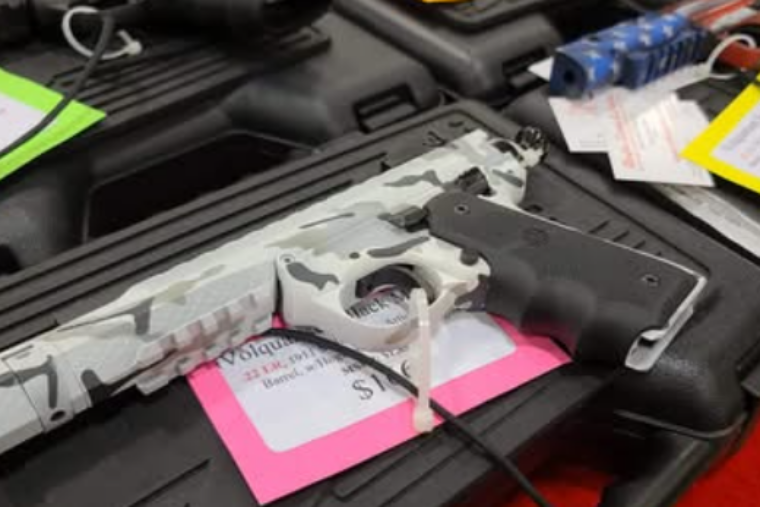
The real issue here is whether government can accomplish indirectly, through financial burdens, what it could not accomplish through outright prohibition. A tax may not prohibit gun ownership on paper, but if its purpose is to discourage people from exercising a constitutionally protected right, the *Bruen* historical-tradition test becomes highly relevant. As this article demonstrates, there appears to be no historical tradition of imposing special taxes on commonly owned firearms for that purpose.
Governor Gavin Newsom (D.) has called it a “sin tax.”
Recently, California layered an 11% retail excise tax on top of ordinary sales tax for firearms, precursor parts, and ammunition. Colorado followed with a 6.5% version. Both sit beside the longstanding federal Pittman-Robertson manufacturer’s excise tax (11% on most firearms, 10% on handguns), and California’s already expensive firearm transfer fees.
For these sorts of taxes to survive under the Supreme Court’s Second Amendment test from New York State Rifle & Pistol Association v. Bruen, the government must show a special tax on common firearms comports with our Nation’s historical tradition of firearm regulation.
A close look at that tradition, from the colonial period through 1900, shows the opposite: this country did not build a habit of singling out common firearms and ammunition for special taxes. The few historical levies that look anything like “weapons taxes” almost always targeted only Bowie knives, pocket pistols, and other arms many contemporaries treated as “dangerous and unusual” weapons that were outside the scope of the Second Amendment right. The prevailing popular arms of the era were almost never singled out for taxation.
By