“The permit is the beginning.”
I’ve been busy balancing the many responsibilities that come with being a law enforcement and civilian firearms instructor in New Jersey. One of the most thought-provoking has been conducting CCW qualifications. After witnessing first-hand the different levels of experience and preparedness among permit holders, it has reinforced for me just how important responsible, realistic, and continued training truly is. These experiences have given me a much deeper appreciation for the responsibility that comes with carrying a firearm and the importance of being honest with ourselves about our capabilities.
Obtaining a New Jersey permit to carry a handgun is an important responsibility. It means the permit holder has met the state’s requirements and demonstrated the required level of proficiency. But as a firearms instructor, I believe permit holders need to be honest with themselves about what that qualification means, and, perhaps more importantly, what it does not mean.
Passing a qualification is not the same thing as being prepared for a defensive encounter.
New Jersey’s current concealed-carry requirements include the CCARE protocol and a required proficiency qualification. The state qualification is designed to establish a baseline of safe handling and shooting proficiency. That baseline is important, but it should be viewed as a starting point rather than the finish line.
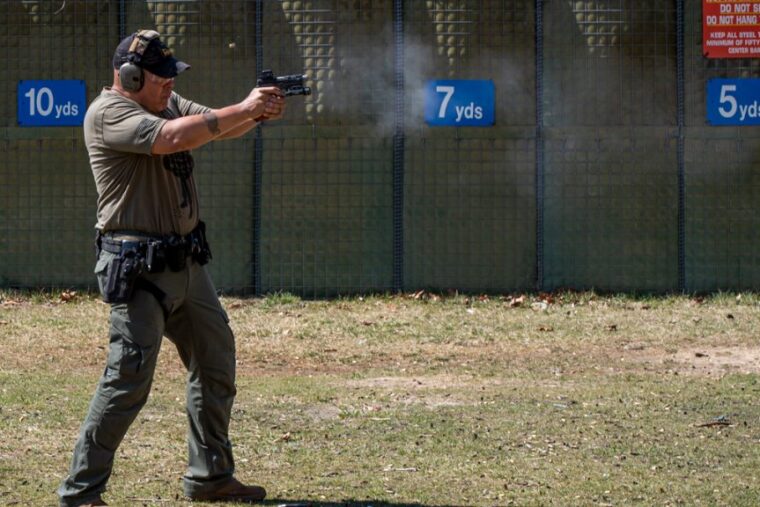
A traditional public range can be useful for developing fundamental marksmanship. It can help a shooter establish a zero, work on grip and trigger control, confirm equipment, and maintain basic proficiency. What it generally does not provide is the uncertainty and complexity of a defensive encounter.
Most public ranges are intentionally structured around safety and predictability. You stand or sit in a designated position, face a known target, and generally know when you are going to shoot. There are few distractions, few competing priorities, and usually no consequence for taking a moment to mentally prepare before the next string of fire.
A real defensive encounter doesn’t make those accommodations.
By Vladimir Vaval