The most important question in this case isn’t whether the government can respond to a mental health crisis. It’s whether the government can strip innocent people of their constitutional rights because of someone else’s circumstances.
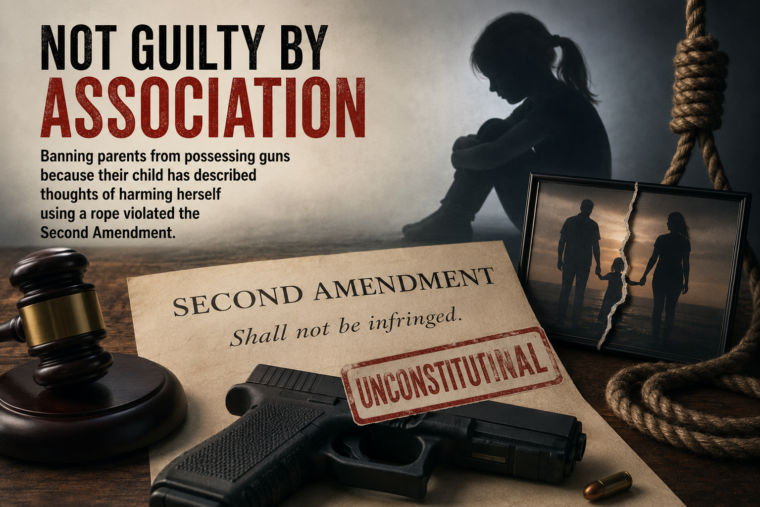
The court got it right. The parents were not accused of threatening anyone. Their firearms were secured. Yet they lost their rights because of their daughter’s mental health emergency.
That is not how constitutional rights work.
The Bill of Rights protects individuals from government overreach. If the government can suspend your rights because of another person’s actions, then those rights no longer belong to you—they belong to the government.
The Second Amendment doesn’t recognize guilt by association, and neither should the courts.
The ban was imposed even though police officers “examined [the parents’] gun safes, confirming that the firearms were stored in locked safes with trigger locks.”
From Wysocki v. Nassau County, decided Tuesday by Judge Sanket Bulsara (E.D.N.Y.):
Dennis and Lisa Wysocki were issued New York State pistol licenses by the Nassau County Police Department’s (“NCPD”) Pistol License Section (“PLS”) in September 2017 and February 2021 respectively. In 2022, both applied for and were issued unrestricted concealed-carry pistol licenses.
The Wysockis live with their minor daughter, who was in middle school in February 2023. On February 8, 2023, their daughter told a school counselor she had been feeling depressed and described past thoughts of harming herself using a rope. The counselor asked her if there were firearms in the home, and she confirmed their presence.
On February 10, 2023, the Wysockis took their daughter to the Cohen Children’s Medical Center. She was evaluated by psychiatrist Dr. Joshua Stein who concluded she “does not represent an imminent danger to self or others” and could return home. On February 11, 2023, Child Protective Services (“CPS”) caseworkers and NCPD officers visited the Wysockis’ home in response to the school report. The NCPD officers examined their gun safes, confirming that the firearms were stored in locked safes with trigger locks.
By Eugene Volokh