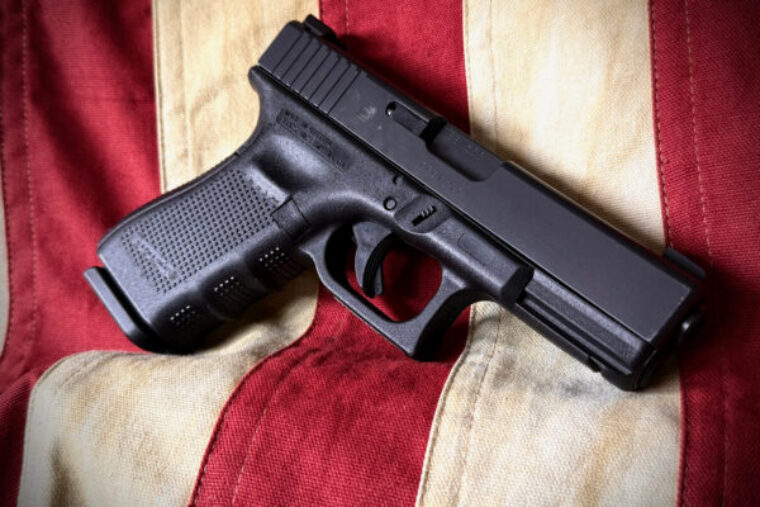
Few firearms have had as much impact on the modern handgun market as the Glock. Its introduction revolutionized handgun design, popularized the polymer framed pistol, and forced virtually every major manufacturer to adapt or be left behind.
Today, shooters benefit from an unprecedented selection of reliable, lightweight, high capacity handguns, many of which owe their existence to the path Glock blazed decades ago.
Whether it is your preferred pistol or not, Glock’s place in firearms history is undeniable. This is a terrific article on the handgun that changed the market forever.
In today’s firearms market, it’s almost impossible to imagine a time before Glock. When polymer-framed semi-automatic pistols were not the norm.
Modern shooters can choose from an enormous variety of calibers, modular grip frames, optics-ready slides, and specialized features tailored for military service, law enforcement, self-defense, and recreational use. But turn the clock back to the mid-1980s, and the handgun landscape looked entirely different.
From the early 19th century onward, the revolver was America’s dominant handgun. Beginning with black-powder six-shooters and continuing through Samuel Colt’s 1873 “Peacemaker,” revolvers earned a reputation for mechanical reliability, cost-effective manufacturing, and cultural significance. These traits kept revolvers relevant well into the 20th century, even as many European nations transitioned to semi-automatic pistols. Law enforcement agencies continued issuing revolvers through the 1980s—typically short-barreled Smith & Wesson models chambered in .38 Special or .357 Magnum. While these guns lacked the ammunition capacity of contemporary semi-automatics, their simplicity and reliability kept them in police holsters for decades.
Manufacturers still built most semi-automatic pistols around traditional hammer-fired designs. They often featured heavy steel frames, blued finishes, and wood grips. Gunmakers treated them as finely machined mechanical tools—often beautifully crafted, but rooted in long-established design conventions. Companies such as Colt, SIG Sauer, Beretta, and Smith & Wesson dominated the market. Yet shifting law enforcement needs, evolving military requirements, and the unconventional thinking of an Austrian engineer would soon disrupt the handgun world forever.
By Ryan Hedges